Label literacy
How to Read a Proprietary Blend Label: A Golden Nerves Walkthrough
A proprietary blend lists each ingredient but only one total weight. On Golden Nerves, six extracts share 195 mg per 2 ml serving. US rules list them heaviest first, so horse chestnut, in second place, is about 97 mg at most. That is roughly 20 mg of aescin, well below the 100 to 150 mg used in trials.
What is a proprietary blend on a supplement label?
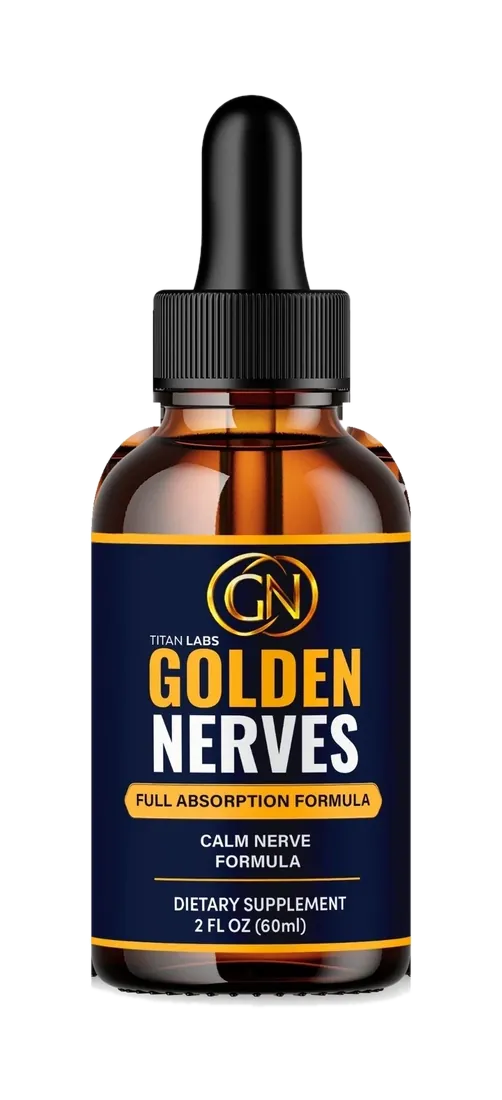
A proprietary blend is a group of ingredients listed under one name with one total weight. The label names every ingredient, but it does not have to show how much of each one is inside. The Golden Nerves bottle uses this format for all six of its plant extracts.
US rules for dietary supplements allow this. The Supplement Facts panel must still list each ingredient in the blend. The FDA labeling rule says those ingredients go in descending order by weight. So the first one listed is the heaviest, and the last one is the lightest, or tied with others.
The FDA does not approve supplements before they are sold. The maker is responsible for the label and for safety (FDA, Dietary Supplements).
What does the Golden Nerves blend line actually say?
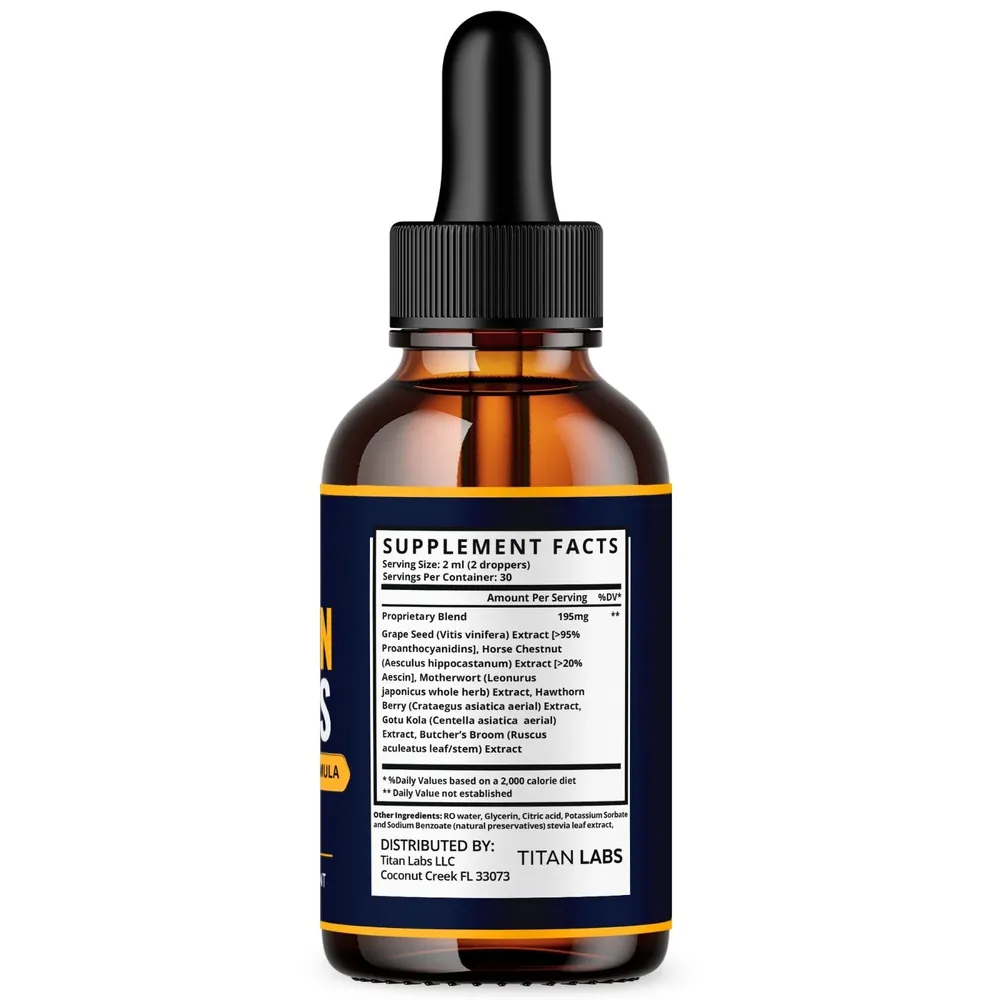
The blend line reads "Proprietary Blend 195 mg" per 2 ml serving (2 droppers). The Daily Value is not established, which is normal for plant extracts.
Under that line, six extracts appear in this order:
- Grape Seed (Vitis vinifera) Extract [>95% Proanthocyanidins]
- Horse Chestnut (Aesculus hippocastanum) Extract [>20% Aescin]
- Motherwort (Leonurus japonicus whole herb) Extract
- Hawthorn Berry (Crataegus asiatica aerial) Extract
- Gotu Kola (Centella asiatica aerial) Extract
- Butcher's Broom (Ruscus aculeatus leaf/stem) Extract
The Latin names show the species and plant part. The motherwort here is Leonurus japonicus, an Asian species, not the European Leonurus cardiaca. Our ingredients page covers each plant in more depth.
What can you learn from a proprietary blend?
More than most people think. The names, the order and the brackets all carry real information.
The order sets an upper limit for every extract
Because the list runs from heaviest to lightest, each spot has a ceiling. Divide 195 mg by the list position, and you have the most that extract could weigh.
| Spot on the list | Extract | Most it can be (of 195 mg) | What that means |
|---|---|---|---|
| 1st | Grape seed | Just under 195 mg | The largest share, and at least 32.5 mg. |
| 2nd | Horse chestnut | About 97 mg | Half the blend at most. |
| 3rd | Motherwort | 65 mg | One third at most. |
| 4th | Hawthorn | About 49 mg | One quarter at most. |
| 5th | Gotu kola | 39 mg | One fifth at most. |
| 6th | Butcher's broom | 32.5 mg | One sixth at most. |
Standardization tells you about quality, not amount
Two extracts show a percentage in brackets. Grape seed is set at more than 95% proanthocyanidins. Horse chestnut is set at more than 20% aescin. These numbers describe how strong each extract is. They do not tell you how much of the extract is in the bottle.
The other ingredients describe the base
The drops are made with RO water, glycerin, citric acid, potassium sorbate, sodium benzoate and stevia leaf extract. No alcohol is listed. We compare this base with capsules in our post on liquid drops vs. capsules.
What can't you learn from a proprietary blend?
You cannot learn the exact milligrams of any single extract. The label does not publish them, and we will not guess.
- The real amount of grape seed, horse chestnut or any other extract
- Whether a late-listed extract is present at a meaningful level or only a trace
- How much aescin or proanthocyanidin you get per serving
- Whether a batch matches a study dose, line by line
If you want more than the label shows, ask the order desk for the certificate of analysis tied to reference GOL-6421-26-GE. It is not published on this site. Our batch check page explains how to match your bottle's lot number.
How does 195 mg compare with research doses?
The short answer: every extract in the blend is almost certainly below the dose used in its main studies. The math below shows why, using horse chestnut as the clearest case.
The horse chestnut math
Pretend the whole 195 mg were horse chestnut extract. At 20% aescin, that is about 39 mg of aescin. Trials in the Cochrane review of horse chestnut seed extract mostly used about 100 to 150 mg of aescin a day (Pittler & Ernst, 2012). So even the impossible best case sits well under the studied range.
The real ceiling is lower. Horse chestnut is listed second, so it can weigh no more than about 97 mg. At 20% aescin, that is roughly 19 to 20 mg of aescin. The ">20%" note allows a bit more, but not 80 mg more.
The same logic for the others
Gotu kola is fifth, so it is 39 mg at most. Trials of a gotu kola triterpene fraction commonly used 60 to 180 mg a day (Chong & Aziz, 2013). Grape seed has the most room, but blood-pressure trials used from the low hundreds of mg up to 2,000 mg a day (Zhang et al., 2016). Our six extracts research review walks through each study in turn.
Disclosed formula vs. proprietary blend: which tells you more?
A fully disclosed formula tells you more, because it lists milligrams for each ingredient. A blend stops at names and order.
| Question you ask | Fully disclosed formula | Proprietary blend (Golden Nerves) |
|---|---|---|
| Which ingredients are inside? | Yes, each one is named | Yes, all six are named |
| How much of each ingredient? | Yes, mg per serving for each | No, only the 195 mg total |
| Which ingredient is heaviest? | Yes, from the numbers | Yes, the first one listed |
| Can you compare each dose to a study? | Yes, line by line | Only as an upper limit |
| Standardization shown? | Often | Yes for two extracts (proanthocyanidins, aescin) |
| Can you spot a tiny "label dressing" amount? | Yes | No, not with certainty |
A blend is not a sign of a bad product on its own. With Golden Nerves, you get the total and the order, but not the split.
How to read the rest of the Golden Nerves bottle
The side panel tells you how to use the drops and when to ask a doctor first.
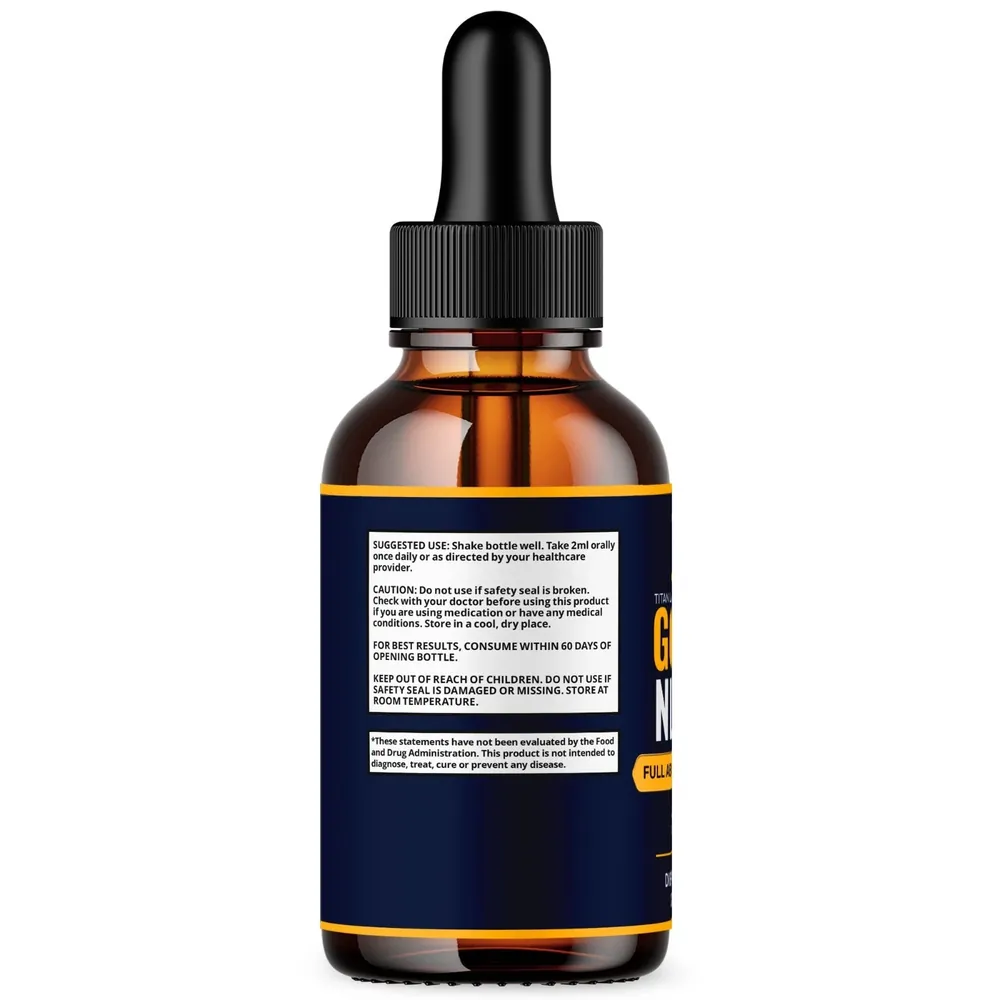
The directions say: "Shake bottle well. Take 2ml orally once daily or as directed by your healthcare provider." A marketing image elsewhere says "2 Drops," but the printed label wins. That means two full droppers. The how-to-use guide shows how to measure it.
The label caution asks you to check with your doctor first if you take medication or have a medical condition. That matters here. Horse chestnut and grape seed may add to the effect of blood thinners such as warfarin, aspirin or clopidogrel. Hawthorn may interact with heart and blood pressure medicines. The side effects page lists the rest.
A five-step label check you can reuse
Find the blend line
Look for the words "Proprietary Blend" and the total weight. On this bottle it reads 195 mg, with a Daily Value that is not established.
Read the order
The first extract is the heaviest. Each one after it weighs the same or less. Grape seed is first here, and butcher's broom is last.
Check the standardization
Brackets like [>20% Aescin] tell you how much active compound the extract should hold. Only two of the six show this.
Do the ceiling math
Divide 195 mg by an extract's spot on the list. That gives the most it could be. Compare that ceiling to the dose used in research.
Read the side panel
Directions, cautions and storage live there. They change how you use the product more than the front does.
The NIH suggests talking with a pharmacist or doctor before any new supplement (NIH ODS). Bring a photo of the back panel.
Questions people ask about this
Is a proprietary blend legal on US supplement labels?
Yes. US rules let makers list a blend with one total weight. Each ingredient must still be named, and they must appear in descending order by weight.
Why doesn't Golden Nerves list the milligrams for each extract?
The label does not say why. Makers often keep blend recipes private. The per-extract amounts are not published anywhere on this site.
Can I get the exact amounts from the order desk?
You can ask. Call the order desk and request the certificate of analysis for reference GOL-6421-26-GE. It is not published here, so we cannot promise what it includes.
Does a lower dose mean the drops won't work?
It means study results do not transfer directly. Nobody has tested this exact 195 mg blend in a published trial, so the honest answer is that its effect is unknown.
Sources for this page
- U.S. Food and Drug Administration. Dietary Supplements. Source
- Pittler MH, Ernst E. Horse chestnut seed extract for chronic venous insufficiency. Cochrane Database of Systematic Reviews, 2012. Source
- Chong NJ, Aziz Z. A systematic review of the efficacy of Centella asiatica for improvement of the signs and symptoms of chronic venous insufficiency. Evid Based Complement Alternat Med, 2013. Source
- Zhang H, et al. The impact of grape seed extract treatment on blood pressure changes: a meta-analysis of 16 randomized controlled trials. Medicine (Baltimore), 2016. Source
- NIH Office of Dietary Supplements. Dietary Supplements: What You Need to Know. Source
Keep reading
Ready when you are
Order Golden Nerves from the authorized US retailer
30 servings in every 2 fl oz bottle. 60-day money-back guarantee. After you order, a real person at the order desk (number in the site footer) handles tracking and refunds.